
GP 327 Othem Othemars


mer grejer
0.0
| Plane | Position | Flip |

 |
||

 |
||

 |
| Show planes | Show edges |
Parish Find Location Othem
Find Location An agricultural field belonging to the farm ʻOthemarsʼ in Othem parish (RAÄ Othem 164:1).
Find Context Classification Agricultural Field
Coordinate Find Location (lat) 6406034
Coordinate Find Location (long) 720772
Present Location Classification Gotlands Museum Magasin Visborg
Coordinate Present Location (lat) 6390259
Coordinate Present Location (long) 695514
Material Limestone
Limestone Type coarse reef debris limestone
Geological Group Slite Group (100%)
Height 305
Width 140
Thickness 10
Lindqvist Type C/D (ca. 700-1000)
Lindqvist Shape Tall stone
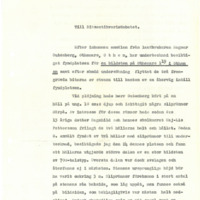
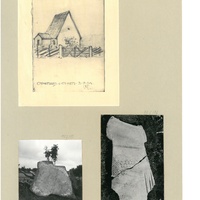
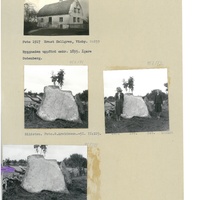
Context and Discovery In September 1951, two fragments of a large picture stone were found during agricultural work (ploughing) on a field at Othemars gård (farm), owned by the farmer Ragnar Gutenberg (Othemars 1:19). The field is located near (south-west of) the farm buildings, next to (west of) the farm track leading from Othemars gård to File hajdar (which is situated 2 km south-west of the farm). The slabs were encountered at a depth of approximately 10 cm. Largely due to the efforts made by Gutenberg’s 13-year-old daughter Ragnhild and her classmate Maj-Louise Pettersson, the two stone slabs have been recognized as archaeologically significant. Therefore, immediately after the discovery, on the 24th of September 1951, Greta Arwidsson investigated the find spot in person. As neither traces of a foundation nor other finds were detected, Arwidsson concluded that the stone must have been moved from its original site and then buried at the place where it was found. Right after Arwidsson’s inspection, the two stone slabs were moved aside. From there they were transferred to Gotlands Fornsal some weeks later. There, the monument was mistakenly registered under the parish Stenkyrka and therefore included by Jan Peder Lamm as “Stenkyrka kyrka 44” in his list (Nylén 1978, p. 183 cat. no. 272). Later, Lamm detected the error (Philip 1986, p. 7) and corrected it in the second and third editions of “Bildstenar” (Lamm/Nylén 2003, p. 195 cat. no. 272 and p. 203 cat. no. 422). All information about the find and its background are taken from the report by Greta Arwidsson to RAÄ (ATA dnr 4493/51, 1951-09-25; GF koncnr 250/51) as well as Gotlands Allehanda 1951-09-24, and Philip 1986, pp. 7–9.
In 2010, two coins and a bronze pendant from the Viking Period as well as a medieval coin were found at the same find spot by metal detecting (RAÄ Othem 257). On the 1941 fastighetskarta (real estate map) (Ek. karta), two stone enclosures (vastar or stensträngar) are registered only 40 and 75 m west of the spot. These enclosures are recorded in the 1976 inventory book; however, they were already removed at that time (RAÄ Othem 164:2).
Measurements, Material and Condition The mushroom-shaped picture stone is largely preserved, only the upper right part of its head and presumably some parts of the root are missing. The limestone slab is broken into two parts, the upper half and the lower half, and the crack runs diagonally across the monument’s body. The upper part has a height of about 1.80 m and is 1.40 m wide. The lower piece is 1.25 m high and 1.40 m wide. The entire slab is approximately 0.10 m thick. Most of the stone’s surface seems smoothed and even polished, not only due to weathering or footsteps but rather by deliberate measures (Philip 1986, p. 9). Furthermore, on the front face of the monument, five deep grinding grooves (sliprännor) and five broader and more flatter depressions (slipsvackor) can be seen; at least nine more deep grooves are ground into the stone’s backside (ibid.). Those grooves and depressions are secondary (see IX). Only a few remains of the original carvings are preserved in the middle third of the stone. In 1984, these carvings were traced with paint (carbon black) in order to document them photographically (Philip 1986, p. 7, bild 1).
Description of Ornament and Images The preserved carvings in the middle third of the stone are easily discernable when using oblique light (Philip 1986, p. 9, bild 3). The simply carved rhombic pattern of a ship’s sail can be seen – most of it on the upper fragment, with only a few rhombi on the lower half. On the left-hand side of the monument’s body, the border decoration is preserved – most of it on the upper fragment. It represents an interlace pattern consisting of two parallel rows of pretzel-like elements, which is very unusual (see IX). On the right-hand side of the stone, only a single pretzel is left on the lower fragment.
Interpretation of the Imagery No interpretation
Type and Dating The picture stone belongs to Lindqvist’s ʻAbschnittʼ C/D, hardly to E, as Type E stones of this size are always decorated with rune stone ornament. Thus, it can be roughly dated to the period between the 8th and 11th centuries. The only picture stone known so far which bears a double (!) interlace border of the kind described above (see VI), is the Type C/D (type D according to Lindqvist) monument GP 3 Alskog kyrka. The decoration of this giant cist stone’s horizontal border, which divides the image field from the root part, is identical to the pattern on the Othemars stone.
The grinding grooves cannot be used for dating picture stones, as they represent secondary features, produced after the creation of the stone, and in all probability after the period when the slab was used as memorial stone and raised in the landscape. Arne Philip (1986, pp. 9–12) counted 15 Gotlandic picture stones with grinding grooves (slipskåror or sliprännor). There is at least one more stone, GP 72 Endre Bäcks, which is almost completely covered by 15 deep grooves. On Gotland, those grinding grooves on stones and rocks are extremely common and have been interpreted in various ways (Munthe 1933; Mårtensson 1936; Swanström 1995; Gibson 2013). Their frequent interpretation as prehistoric calendar (Henriksson 1983) is not compelling, cf. the critical views of Lindström (1997). Similar grooves can be encountered in many places throughout Europe. An unwieldy abundance of literature has been published about their dating and their function (gathered and summarised by Eitelmann 2005, pp. 189–194 and Schels, 2010, pp. 141–161). Especially when found on medieval and early modern church buildings, gravestones, and conciliation crosses (a roadside cross erected where a tragic event occurred), those grooves and cups could be the result of grinding to produce stone meal, presumably for use in religious folk medicine. Medieval Gotlanders probably regarded the picture stones as efficacious relics and powerful media of ancient times and therefore used them for folk religious purposes (Oehrl 2019a, pp. 41, 105–106; Oehrl 2020a, pp. 88–89).  GP 3 Alskog kyrka
 GP0072
References Philip 1986
Bildstenen påträffades 1951 vid plöjning av en åker tillhörande gården Othemars i Othems socken.
Nuvarande lokalisering
Gotlands Museums magasin, Visborgsslätt.
Beskrivning
Två delar av en svampformig bildsten (typ C-D), 180 x 140, 125 x 140 cm. Bildstenen är fylld av sekundära sliprännor, men spår av segel till ett skepp och kantdekor är bevarade
Datering
Dateringen kan inte anges närmare, men den tillhör perioden 700-900-talen.
Tolkning
Ingen tolkning
AA
TitleGP 327 Othem Othemars
Fornsök ID L1976:7411
RAÄ ID Othem 164:1
Gotlands Museum ID GFC11043
Jan Peder Lamm ID 422
Last modified Apr 23, 2026
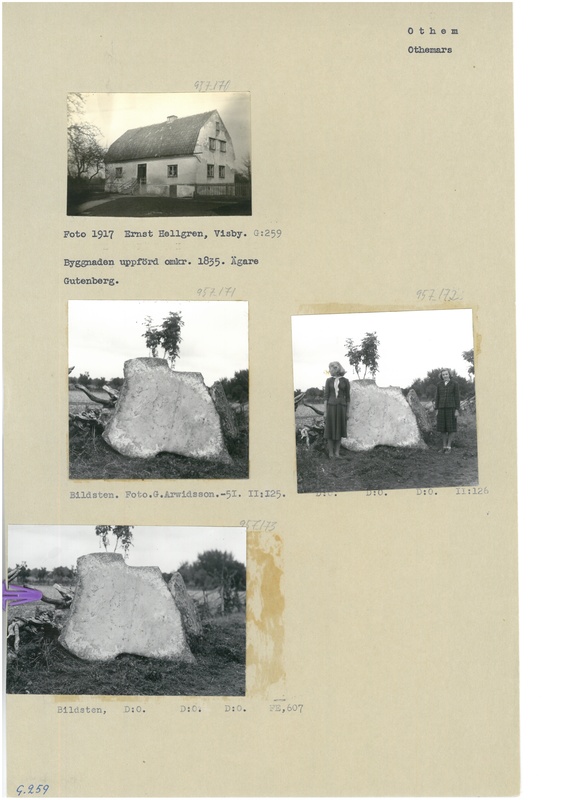
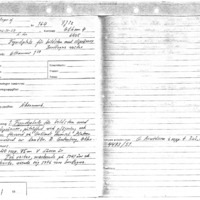 GF_inventeringsbok_1976.pdf
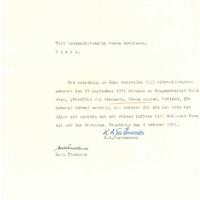 GF_Othem_gårdar_K-R_Othemars_dnr_426-51_floderus_Gustawsson_1951.pdf
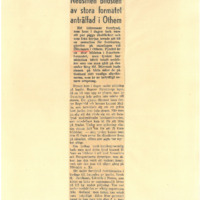 GF_Othem_gårdar_K-R_Othemars_Gotlands_Allehanda_14-09-1951.pdf
 GF_Othem_gårdar_K-R_Othemars_koncnr_250-51_Arvidsson_1951.pdf
 GF_Othem_kyrka_allmänt_gårdar_A-Ö_original.jpg
 GF_Othem_kyrka_allmänt_gårdar_A-Ö_Othemars_kopior.jpg